
Why Do I Leak When I Laugh, and Are Kegels Actually Working?
A little leak when you laugh, sneeze, or lift something heavy is one of the most common things women stop mentioning. They assume it is simply part of getting older, they buy the pads, and they quietly rearrange their lives around it.
I want to take this one seriously, because it deserves to be taken seriously. Let me explain why it happens, why the Kegels you have been doing may not be fixing it, and what actually strengthens the pelvic floor.
Why Does This Happen After Menopause?
What you are describing is most likely stress urinary incontinence. It is leakage that happens when pressure inside your abdomen rises suddenly, during a laugh, a cough, a sneeze, or a lift, and the pelvic floor does not hold the way it should.
The pelvic floor is a network of muscle, fascia, and ligament that supports the bladder and the urethra and keeps them closed under pressure. Two things wear on that system over time. The muscle itself loses mass and coordination with age. And the connective tissue that the muscle depends on, the fascia and ligaments,loses collagen and stiffness as estrogen declines. Estrogen receptors are present throughout the pelvic floor and lower urinary tract, so when estrogen falls, the whole support structure loses some of its integrity.
I want to be straight with you about the research, because you deserve accuracy rather than a tidy story. Studies do not all agree that menopause directly causes stress incontinence. Some show itpeaking around the time of menopause, and others show the picture is more complicated than a single cause. What is clear is that it becomescommon in this stage of life, affecting a large share of women in the menopausal years. Common enough that you are in very ordinary company, and worth addressing rather than enduring.

Are Kegels Actually Working?
Sometimes yes. Often not, and there are specific reasons why.
Kegels can genuinely help, and for many women a properly performed pelvic floor exercise program is the right first step. The problem is that doing them correctly is harder than it sounds. Research has found that a large proportion of women perform Kegels incorrectly when working from written instructions alone, often bearing down instead of lifting, or recruiting the wrong muscles entirely.
There are three common reasons your effort may not be paying off. The first is technique, because the pelvic floor is difficult to locate and isolate without feedback. The second is consistency, because the exercises only work when done regularly over months, and life gets in the way. The third is depth, because even correctly performed Kegels can struggle to reach and recruit the deep muscle groups that matter most.
So if you have been faithfully doing Kegels and feeling like nothing is changing, you are not failing. You are running into the real limits of the exercise.
What Actually Strengthens the Pelvic Floor?
The goal is to restore both strength and neuromuscular control, the muscle's ability to fire correctly when you need it.
Pelvic floor physical therapy is excellent and underused. A trained therapist gives you the feedback that written instructions cannot, and for many women that is the missing piece. I recommend it often.
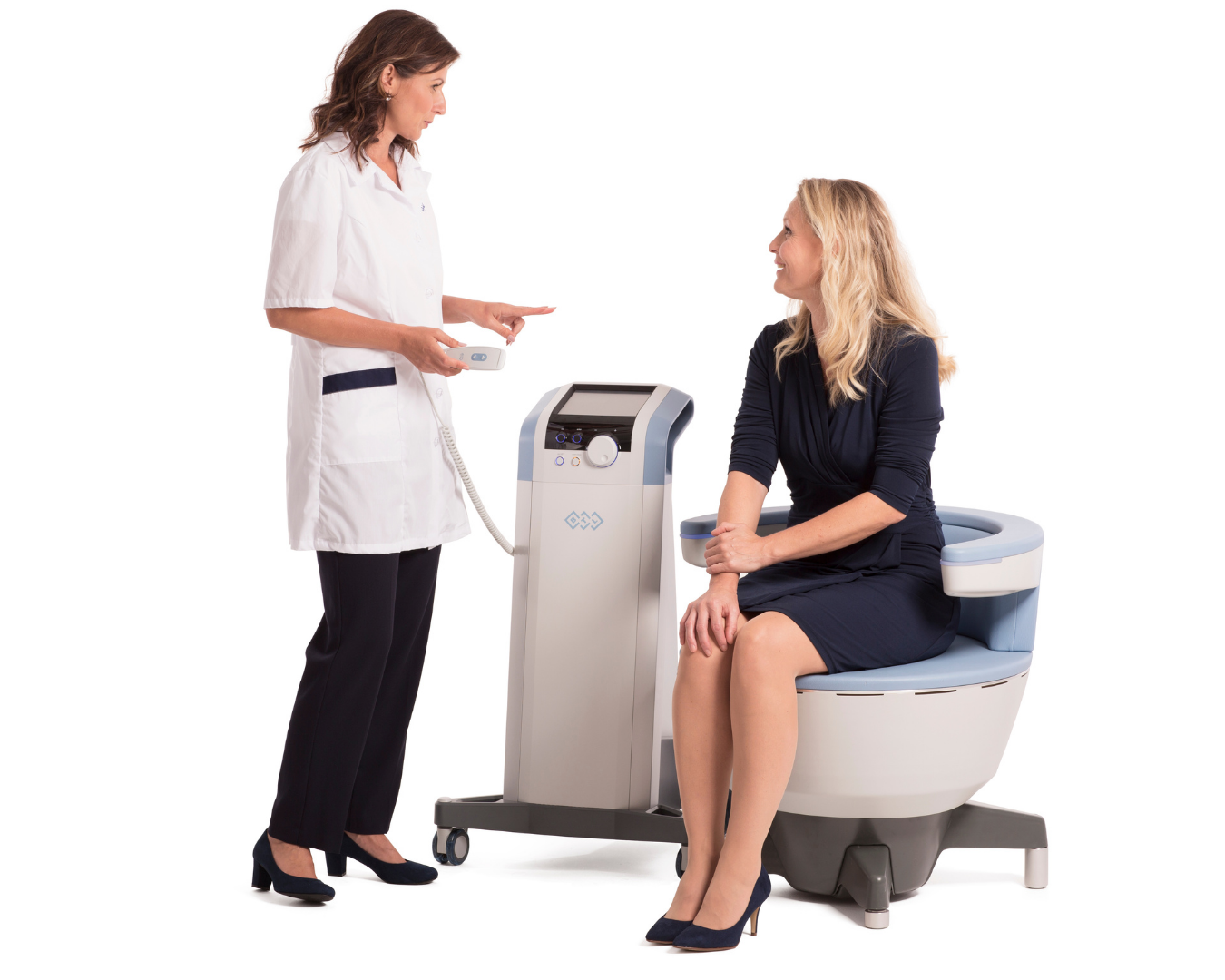
In my office, I use Emsella for this same purpose. It uses high-intensity focused electromagnetic energy to stimulate the entire pelvic floor while you sit fully clothed in a chair. A single session inducesthousands of supramaximal contractions, far more than you could perform on your own, and it reaches the deep muscle that voluntary effort has trouble recruiting. It solves the technique problem and the depth problem at once, because you are not the one trying to find and fire the muscle.
Clinical studies are encouraging, although the evidence base is still developing. Emsella is FDA-cleared for the treatment of urinary incontinence through noninvasive electromagnetic stimulation of the pelvic floor musculature. In apublished study using validated quality-of-life questionnaires, most women reported meaningful improvement in quality of life after a treatment series, and a majority reduced or eliminated their use of pads. A separatesystematic review and meta-analysis of electromagnetic pelvic floor stimulation found consistent improvement across studies. This is not a cure for every case, and results vary. It is a well-tolerated, noninvasive way to strengthen the pelvic floor, and for many women it accomplishes what independent Kegels could not.
When to See Someone
Leaking is common, and it is also treatable. That combination is the reason to bring it up rather than manage it privately with pads.
If your leakage is new, changing quickly, painful, or accompanied by other symptoms, start with your physician or a urogynecologist, because incontinence has several causes and they are worth sorting out properly. For the ordinary, gradual weakening that so many women notice in these years, strengthening the pelvic floor is where the work is.
I am a woman in my fifties. I have gone through this. I know how easy it is to fold something like this into the background of your life and stop expecting it to get better. It can get better, and you are allowed to expect that.
Ready to Get Started?
If you would like to schedule an Emsella treatment, or find out whether it is right for you, call our office at (805) 870-4487 or send us a message through our contact page and we will reply within 24 business hours. Already a patient? You can add Emsella to your next visit.
