

If you've ever considered laser resurfacing but hesitated because of the recovery time, you're not alone. Some laser treatments can require a week or more of healing, with significant redness, peeling, and sensitivity.
But laser resurfacing isn't one-size-fits-all.
Today, we have different technologies that allow us to tailor treatment to your skin concerns, desired results, and tolerance for downtime.
One option is non-ablative fractional laser resurfacing, which can improve sun damage, pigmentation, and skin texture with a shorter recovery period than more aggressive ablative treatments.
Let's explore how it works, what it can realistically improve, and how it compares with other treatments like microneedling.
What Is Laser Resurfacing?
Laser resurfacing uses controlled light energy to stimulate skin renewal and improve visible signs of aging and sun damage.
There are two main approaches.
Ablative lasers, including CO₂, remove portions of the skin's surface and stimulate tissue remodeling. They can produce significant improvements in wrinkles, scarring, and advanced photodamage, but generally involve more downtime and a longer healing process.
Non-ablative lasers heat targeted areas of the skin without removing the surface in the same way. They typically offer a gentler approach with less downtime, although results may be more gradual and multiple treatments may be needed.
Neither approach is universally better. Each has its place depending on the condition being treated.
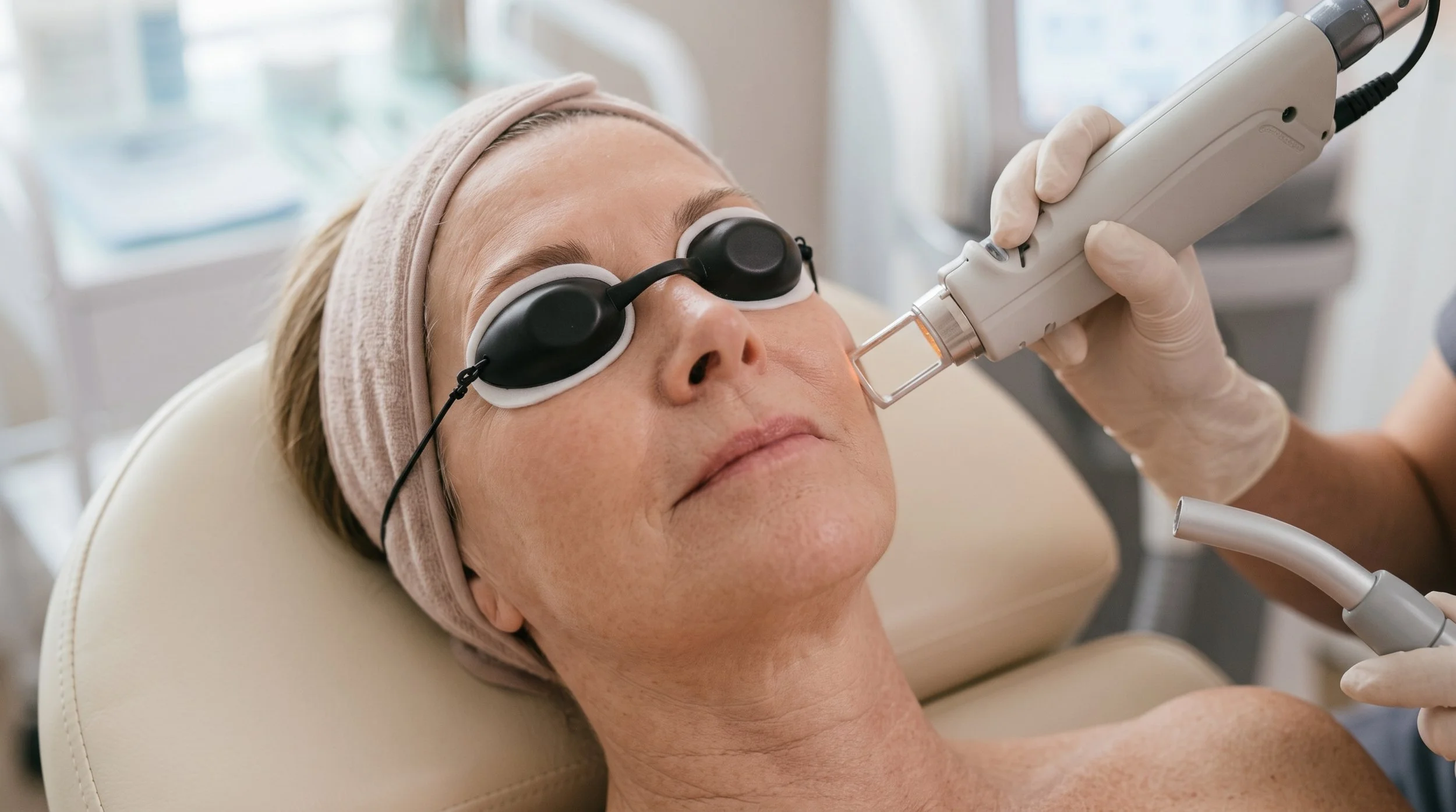
At my practice, I use the Lutronic ULTRA, also known as LaseMD Ultra, a non-ablative fractional laser.
"Fractional" means the laser creates thousands of microscopic treatment zones while leaving surrounding tissue relatively unaffected, helping support a faster recovery.
How Does the Lutronic ULTRA Work?
The Lutronic ULTRA uses a 1927 nm thulium laser wavelength that is strongly absorbed by water in the skin.
This creates controlled microscopic zones of thermal injury, primarily targeting the more superficial layers of the skin.
The body's natural repair response helps eliminate damaged, pigment-containing cells and stimulates tissue renewal and collagen remodeling.
Over the following days and weeks, skin can gradually appear brighter, smoother, and more even in tone.
If you've read my article on microneedling, the underlying concept may sound familiar.
Both treatments stimulate the skin's repair process, but they do so differently. Microneedling uses controlled mechanical injury, while lasers deliver targeted light energy that produces a thermal response.
The 1927 nm wavelength is particularly useful for addressing superficial pigmentation and photodamage.
What Can It Help With?
Non-ablative fractional resurfacing can improve several common skin concerns.
Sun damage and brown spots. Helps reduce the appearance of sun-induced pigmentation and uneven skin tone.
Dullness and uneven texture. Encourages skin renewal for a smoother, brighter appearance.
Fine lines. Collagen remodeling may gradually soften superficial lines.
Visible pores. Improvements in skin texture can make pores appear less noticeable.
Overall photodamage. Can improve some of the visible changes associated with cumulative sun exposure.
Certain pigmentary conditions, including melasma, require particular caution. Although fractional 1927 nm lasers have been studied for melasma, heat and inflammation can also worsen pigmentation or contribute to recurrence.
Similarly, actinic keratoses are precancerous lesions that require medical assessment. Although the Lutronic ULTRA has an indication for certain actinic keratoses, suspicious or persistent lesions should be evaluated before cosmetic laser treatment.
Laser Resurfacing vs. Microneedling: How Do I Choose?
This is one of the questions I am asked most.
Both treatments stimulate skin renewal and collagen remodeling, but they have different strengths.
Microneedling creates controlled mechanical micro-injuries in the skin. It is a versatile option for improving texture, fine lines, and certain types of acne scarring.
Non-ablative fractional laser resurfacing delivers controlled thermal energy and, with the 1927 nm wavelength, is particularly useful for superficial pigmentation, sun damage, and uneven tone.
Neither treatment is automatically superior.
For some patients, microneedling may be the better choice. For others, laser resurfacing may address their primary concerns more effectively.
And in some cases, a thoughtful treatment plan may incorporate both at different times.
The goal is not simply to stimulate collagen. It's to understand what is causing the changes in your skin and choose the treatment most likely to address them.
What to Expect
Shorter downtime. Compared with aggressive ablative resurfacing, non-ablative fractional lasers generally involve less recovery. You may experience redness, mild swelling, warmth, dryness, bronzing, or a rough, sandpaper-like texture for several days. Recovery depends on your skin and treatment intensity.
Gradual improvement. Pigmentation and skin brightness may begin improving over the following weeks, while collagen remodeling continues over time.
More than one session may be beneficial. Some patients notice improvement after a single treatment, while others benefit from a series. The number and spacing of treatments depend on the condition being addressed and the response of your skin.
Sun protection is essential. Proper aftercare and consistent sun protection help support healing and reduce the risk of unwanted pigmentation.
Is It Appropriate for All Skin Tones?
The Lutronic ULTRA can be used across a range of skin tones, including some patients with deeper skin pigmentation.
However, no laser is completely risk-free.
Patients with darker or pigment-prone skin have a greater risk of post-inflammatory hyperpigmentation following procedures that create heat or inflammation.
Treatment settings, skin preparation, medical history, and post-treatment care all matter.
This is why I believe laser treatments should always be individualized rather than approached with the same settings for every patient.
Why Fall Is a Great Time for Laser Resurfacing
Fall and winter are often convenient seasons for laser resurfacing because shorter days and less time spent outdoors can make sun avoidance easier.
Following treatment, protecting your skin from UV exposure is particularly important to support healing and minimize the risk of unwanted pigmentation.
That doesn't mean laser resurfacing can only be performed during the cooler months.
What matters most is appropriate treatment selection, careful aftercare, and consistent sun protection throughout the year.
Is Laser Resurfacing Right for You?
The Lutronic ULTRA may be a good option if you're looking to improve sun damage, uneven pigmentation, dullness, or early textural changes without the extended recovery associated with more aggressive resurfacing.
But the best treatment isn't necessarily the strongest laser or the one with the least downtime.
It's the one that addresses your specific concerns while balancing effectiveness, safety, and recovery.
As a physician, I believe in teaching before treating. My goal is to help you understand your options so you can make informed decisions about your skin, whether or not you ever sit in my chair.
This article is intended for general education and is not a substitute for individualized medical advice. Laser treatments carry potential risks, including burns, pigmentary changes, infection, and scarring. A qualified medical professional should assess your skin and medical history before treatment.
Ready to Get Started?
If you'd like to learn whether laser resurfacing is appropriate for your skin, call our office at (805) 870-4487 or contact us here.
Already a patient? Ask us whether laser resurfacing would be an appropriate addition to your treatment plan.
